
How to Use the Protein Calculator
Follow a step-by-step protein calculator guide for body weight, editable g/kg or g/lb rates, protein per meal, protein Calories, and result interpretation.
How does this guide help you use the Protein Calculator?
This guide explains which values to enter, how the Protein Calculator processes them, and how to read the resulting estimate. Follow the sections below to check assumptions, compare realistic scenarios, avoid common input mistakes, and understand when an official source or qualified professional should take priority over a planning result.
Before You Start
Have a current body weight and decide which weight-based protein rate you want to model. The starting range and comparison rate are cited adult references, but they are not a personal prescription. Use a rate supplied by a qualified professional when your health, training, age, or recovery needs require individual guidance.
1. Choose U.S. or Metric Units
Select U.S. Units to enter weight in pounds and rates in g/lb/day. Select Metric Units to enter kilograms and g/kg/day. Switching units converts the same underlying scenario rather than changing the intended target.
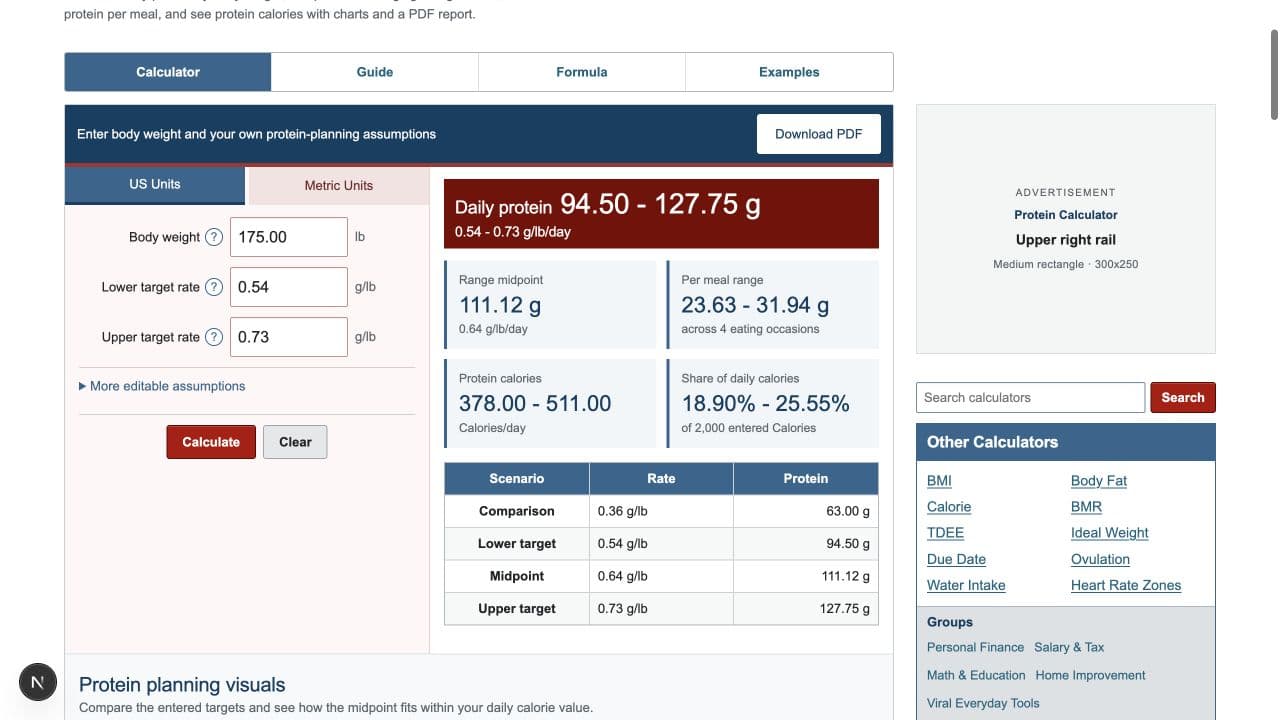
The calculator places body weight and editable target rates first. Additional assumptions are available below the primary inputs.
2. Enter Body Weight
Enter the weight that should drive the calculation. The calculator accepts decimals and validates the value before calculating. It converts pounds with the exact international conversion factor:
A unit mismatch creates a large error. For example, entering 154 as kilograms instead of pounds more than doubles the body weight used by the formula.
3. Review the Lower and Upper Protein Rates
The lower and upper rates define the daily range. In metric mode, the starting 1.20 to 1.60 g/kg/day values reflect the protein target presented by the 2025-2030 Dietary Guidelines for Americans. You can replace them with another evidence-based range.
- Lower rate: creates the bottom of the daily range.
- Upper rate: creates the top of the daily range.
- Validation: the lower rate cannot exceed the upper rate.
4. Edit the Additional Assumptions
Open the additional assumptions when you want to control the comparison and supporting metrics.
- Comparison rate
- Produces a separate daily amount. The starting 0.80 g/kg/day value is the adult protein RDA used in the National Academies DRI framework.
- Meals per day
- Divides daily grams evenly for planning. It does not require equal protein at every meal.
- Daily calories
- Provides the denominator for protein calorie share. Enter a value from your own plan or estimate it with the TDEE Calculator.
5. Read the Results in Order
- Start with the daily protein range.
- Use the midpoint only as the mathematical center of the selected range.
- Compare the range with the comparison amount.
- Review grams per meal as an even-distribution planning aid.
- Check protein Calories and calorie share against the daily calories you entered.
The result is an estimate derived from the selected rates. It cannot determine whether your actual food intake is adequate or appropriate.
6. Use the Charts and Scenario Table
The scenario comparison chart places the comparison, lower, midpoint, and upper daily amounts on one scale. The calorie-share visual shows how much of the entered daily energy would come from protein at each point in the range. A text table provides the same values without requiring the chart.
If a chart appears unexpected, check the selected unit, weight, rates, and daily calorie value before interpreting it.
Worked Example: 70 kg Adult Scenario
Enter 70 kg, a range of 1.20 to 1.60 g/kg/day, a comparison rate of 0.80 g/kg/day, four meals, and 2,000 Calories.
| Output | Calculated result |
|---|---|
| Daily range | 84.00 to 112.00 g |
| Midpoint | 98.00 g |
| Comparison | 56.00 g |
| Per meal | 21.00 to 28.00 g |
| Protein Calories | 336.00 to 448.00 Calories |
| Calorie share | 16.80% to 22.40% |
See three additional scenarios on the Protein Calculator examples page.
Common Mistakes to Avoid
- Mixing pounds with a g/kg rate or kilograms with a g/lb rate.
- Treating the midpoint as a separate scientific recommendation.
- Assuming the per-meal result is a required meal schedule.
- Using a calorie-share result based on an outdated or placeholder calorie value.
- Applying a general adult scenario to a medical condition without professional review.
References and Further Reading
Review the official sources below for the protein target, adult DRI comparison, and calorie conversion used by the calculator. The formula page documents every calculation.
Corrections and Review
Report an issue or error in the calculator using the Contact Us page.