
How to Calculate Percentages
Learn percentage basics, change, difference, increases, decreases, discounts, percentage error, and reverse percentage calculations.
How does this guide help you use the Percentage Calculator?
This guide explains which values to enter, how the Percentage Calculator processes them, and how to read the resulting estimate. Follow the sections below to check assumptions, compare realistic scenarios, avoid common input mistakes, and understand when an official source or qualified professional should take priority over a planning result.
Choose the Right Percentage Question
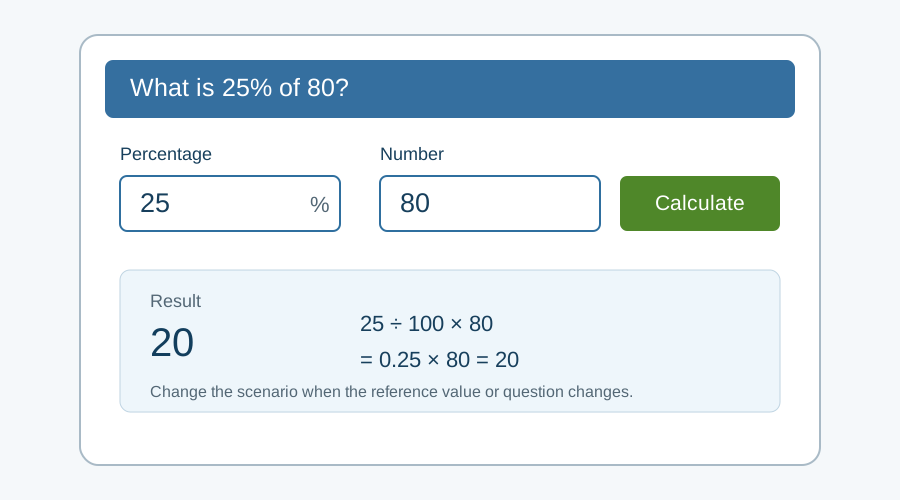
A percentage of a number, the percentage one value represents of another, percentage change, and percentage difference use related but distinct formulas. Choose the calculator scenario that matches what the reference value means.
Percentage Change vs. Percentage Difference
Percentage change uses a specific original value as its reference. Percentage difference treats two values symmetrically and divides their absolute difference by their average.
Discounts, Markups, and Reverse Percentages
For a discount, calculate the savings and subtract it from the original price. For a markup, add the percentage amount. Reverse calculations divide the final value by the remaining or increased multiplier.
Common Mistakes
Do not interchange the original and new values in percentage change. Confirm that compared values use the same unit, and do not divide by zero when the reference value is zero.
References
Report an issue or unclear result through the Contact Us page.